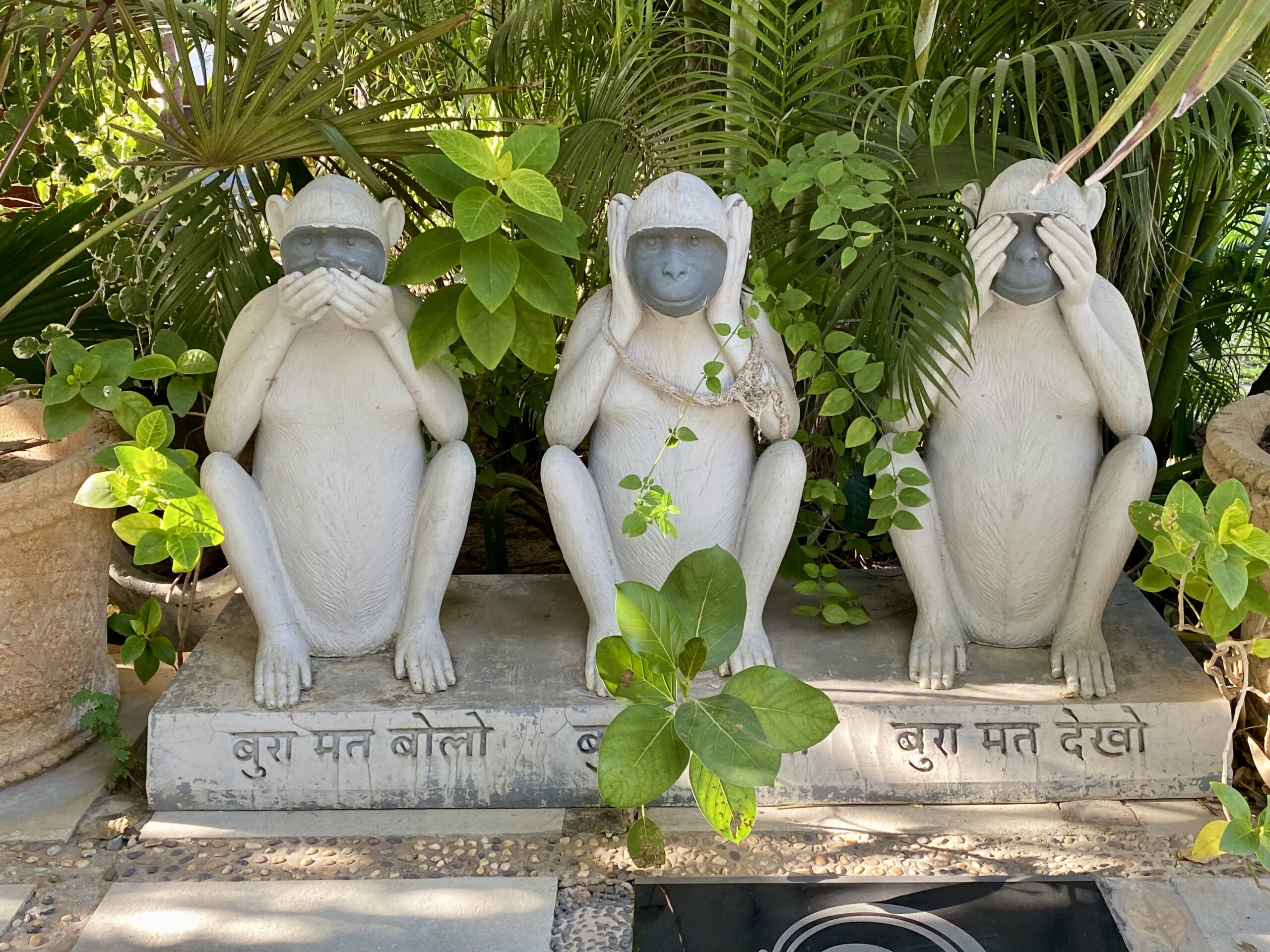
Peace may begin within us, but it changes the world through the way we see, hear and treat one another.
Those of us old enough to remember 11 September 2001 will probably never forget where we were when the world seemed to stop.
I was working in the City of London at the time and had gone to a hairdressing salon when news began to emerge that a plane had crashed into the World Trade Center in New York.
I remember staring at the television screen in stunned silence as the terrible events unfolded. Nobody quite knew what to say or how to comprehend what we were witnessing.
Back at work, we had an American colleague who, only the year before, had worked at the top of one of the towers. As the buildings came down, it slowly dawned on her that some of her friends and former colleagues might have been caught up in the attacks.
The trains were temporarily suspended amid fears of an attack in London, so I found her a taxi and made sure she got home safely.
Later, on my own journey home, I joined a small crowd gathered outside a television shop. We stood together in silence, watching those unbearable images being repeated.
That night, feeling an overwhelming need to reach out and connect, I sent a message of peace, hope and love to my family and closest friends. I was just about to begin the monthly newsletter that would eventually become such a significant part of my life and work.
Looking back, I can see that I was instinctively reaching for the one thing that felt capable of answering such terrible hatred: connection.
Even then, something inside me knew that the only meaningful response was to create more love between us.
Twenty-five years later
Over the years, I have returned to 9/11 several times in my writing.
In 2007, I asked whether its legacy might still become peace in our time.
In 2010, I gathered together eleven articles about peace and healing.
On the tenth anniversary, I wrote that peace begins with you and me.
Twenty-five years after 9/11, I find myself reflecting once again on what we have learnt since that terrible day.
Are we any better at understanding one another? Have we created a world in which more people feel safe, accepted and able to belong?
Sadly, the world does not feel safer or more peaceful.
We may be able to communicate instantly across continents and witness events on the other side of the world as they happen, but greater communication has not necessarily brought greater understanding.
In many ways, we are more connected than ever technologically while becoming increasingly disconnected from one another as human beings.
It is still so easy to fall into the trap of “us and them”, labelling people according to their religion, nationality, background or political beliefs and forgetting the human being beneath the label.
We decide what someone believes before we have spoken to them, and sometimes condemn whole communities for the actions of a few.
Yet multiculturalism does not lead to disintegration. Division does.
In our hearts, people everywhere want many of the same fundamental things: safety, dignity, love, belonging and a hopeful future for their children.
Almost 3,000 people lost their lives on 11 September 2001, but each one was far more than a number. They were someone’s child, parent, partner, sibling, colleague or closest friend, with plans for that evening, hopes for the future and people waiting for them to come home.
Whenever we reduce someone to a label, it becomes easier to stop being curious about who they really are or what they may have lived through.
This does not mean excusing cruelty, tolerating injustice or pretending that profound differences do not exist. It simply means refusing to lose sight of our shared humanity.
Peace begins within us
When we think about world peace, the challenge can feel so immense that we conclude there is very little an ordinary person can do.
We cannot resolve every conflict or negotiate agreements between nations, but we are not powerless. Nor can we leave the creation of peace entirely to politicians, governments or international organisations.
As Peace Pilgrim once said:
“World peace will never be stable until enough of us find inner peace to stabilise it.”
For many years, I have written that peace must begin within us, and I still believe that.
The anger, fear and resentment we do not address inevitably find their way into our relationships, shaping how we interpret other people and how readily we see a threat where there may simply be a difference.
But I now see another part to this truth:
Peace may begin within us, but it becomes real in the space between us.
It becomes real through the way we speak, listen, disagree, forgive and connect. It is found in our willingness to put ourselves in another person’s shoes and remain curious about someone whose experiences and beliefs may be very different from our own.
This is at the heart of The Connection Revolution.
We cannot outsource human connection, and neither can we outsource the everyday creation of peace. It is built between us, one encounter and one relationship at a time.
Every encounter gives us an opportunity to create a little more understanding.
Peace can begin with an apology, a willingness to forgive, an invitation to someone who feels excluded or one honest conversation between people who have stopped listening to each other.
These actions may seem small, but small acts of connection matter.
Peace as a way of living
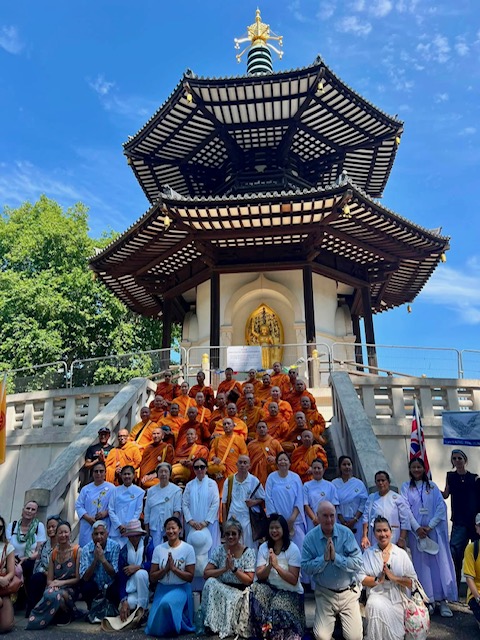
This summer, I joined Buddhist monks, nuns and fellow peace seekers on a walk through London to the Peace Pagoda in Battersea Park.
What stayed with me was not simply the destination, but the experience of walking alongside people from many different backgrounds who shared a common intention.
We were not merely talking about peace; we were practising it together.
I experience something similar when volunteering at the drop-in for people seeking asylum.
Families receive practical support, but they also receive something equally precious: warmth, dignity, safety and a genuine sense of belonging.
The mothers who have thanked me were not asking for grand political declarations. They were grateful that, for a few hours, they and their children felt welcomed, accepted and loved.
These experiences remind me that peace is not simply the absence of war.
Peace is also the presence of belonging—the feeling that there is a place for you in the human family and that, despite our different religions, nationalities, cultures and beliefs, your life matters just as much as mine.
What remembrance asks of us
Twenty-five years after 9/11, remembrance must mean more than revisiting the terrible images of that day.
Of course, we should remember those who died and honour the courage of the emergency services and ordinary people who risked—and sometimes gave—their lives to help complete strangers.
But remembrance must also ask something of us.
Perhaps there is someone we could forgive, a judgement we could release or a conversation we have been avoiding.
Perhaps there is someone in our community who is longing to feel welcomed and included.
Or perhaps we can offer one small act of kindness to a stranger, friend or neighbour this week.
The greatest tribute we can pay to everyone whose life was lost or changed forever on 11 September 2001 is to refuse to add to the fear and division in our world, and to create more compassion and connection in the part of it we touch.
Let us listen more deeply, become more curious about those who seem different from us and do what we can to help the people around us feel seen, welcomed and valued.
Peace in our world is not merely a distant ideal. It is an everyday practice.
It may begin within each of us, but it comes alive between us—in our conversations, our relationships and the way we treat the next person we meet.