The real test of self-love begins when someone else says no – and you have to decide what that means about you.

Last week, I wrote about what it really means to say, “I choose you”
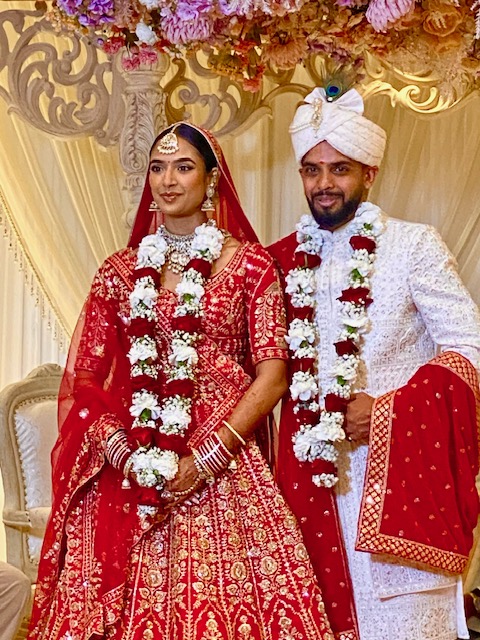
It was in the context of my cousin Suraj marrying his sweetheart Aayushi.
At a wedding, two people stand before their families, friends and the wider world and publicly choose one another. Beneath the ceremony, celebration and beautiful words lies a profound declaration:
Of all the people in the world, I choose you. I choose to share my life with you. I choose to keep choosing you.
It is one of the most powerful promises one human being can make to another.
But after writing that article, a different question stayed with me:
What happens when somebody doesn’t choose you?
As beautiful as it is to be chosen, much of life is also lived through moments when we are not.
Recently, someone I genuinely wanted to coach decided to work with somebody else. Her reasons were entirely understandable. My fee was considerably higher than the alternatives available to her locally, and she had found someone who felt right for her present circumstances.
She explained her decision warmly. I replied with love, wished her well and told her I would be cheering her on.
I meant every word.
Yet afterwards, I noticed that my mind had not completely let go.
I wondered whether I could have offered a different payment arrangement, changed the structure of the engagement or found another way to make it work.
Those were reasonable commercial questions. But the more honestly I examined my reaction, the more I realised that something deeper was happening.
I wasn’t only disappointed about losing the coaching engagement.
Some part of me was disappointed that she hadn’t chosen me.
That was uncomfortable to admit.
Her decision had touched the deeply human desire to be valued, wanted and chosen.
Most of us know this feeling.
Someone we love decides not to pursue a relationship with us. A friend stops inviting us. A prospective client chooses somebody else. We are overlooked for a role, an opportunity or a place at the table.
Even when the other person’s reasons are perfectly understandable, it is easy to turn their decision into a judgement about ourselves.
Perhaps I wasn’t good enough. Perhaps I asked for too much. Perhaps I should have tried harder, given more or made myself easier to choose.
Before long, we are no longer simply experiencing disappointment. We are negotiating away our own value in the hope that someone else’s “yes” will restore it.
Recently, I came across an idea from Townsend Wardlaw that stopped me in my tracks:
You cannot build a million-dollar relationship with a founder until you have built one with yourself.
Although Townsend was talking about trusted advisers and the founders they serve, the insight reaches far beyond business:
You cannot build an extraordinary connection with another person until you have begun building an extraordinary connection with yourself.
If I do not value myself, I may look to you to prove that I am valuable.
If I do not trust myself, I may constantly need reassurance from you.
If I believe love must be earned through giving, pleasing or being useful, I may perform for connection rather than allowing myself to be truly known.
And if I abandon myself whenever somebody rejects or disappoints me, no amount of external love will ever feel completely secure.
This is where self-love becomes much more than an appealing phrase.
It is not about admiring yourself every moment, pretending rejection does not hurt or believing you should never need anyone else.
It is knowing that when life disappoints you, you will remain on your own side.
It means telling yourself the truth, honouring your needs and speaking to yourself with the compassion you would offer somebody you love. It means allowing yourself to feel disappointed without turning that disappointment into a verdict on your worth.
The lesson I took from this experience was simple:
Self-love is not believing that everyone should choose you. It is refusing to abandon yourself when they don’t.
When we need another person to choose us in order to feel worthy, we may cling, perform, overgive, make ourselves smaller or remain in relationships that no longer honour who we are.
When we are rooted in our own worth, we can love more freely.
We can care deeply without controlling the outcome, make courageous invitations without needing a particular answer and allow another person the freedom to choose what is right for them without losing ourselves in the process.
Perhaps every public promise to choose another person needs to be supported by a quieter, private promise:
I choose you, and I will love you wholeheartedly. But I will not abandon myself in order to keep your love.
That is the promise beneath every public “I choose you”:
I will continue to choose myself too.
This is where the Connection Revolution truly begins.
Every connection we create is shaped by the relationship we already have with ourselves. The more secure that inner relationship becomes, the less we need to grasp, prove, perform or hide—and the more freely we can love.
So I invite you to sit with three questions:
Where in your life are you still waiting for somebody else to choose you?
What have you allowed their answer—or their silence—to mean about you?
And what would choosing yourself look like now?
It might mean setting a boundary, making the decision you have been postponing or asking clearly for what you need.
It might mean receiving help without guilt, walking away from a closed door or refusing to treat somebody else’s “no” as the measure of your worth.
As for me, I am learning that I can care deeply, create genuine value and make a wholehearted invitation without needing the other person’s “yes” to prove who I am.
I can wish them well, learn from the experience and continue to choose myself.
If this has stirred something in you, I invite you to take my free Inner Transformation Scorecard. In just a few minutes, it will show you where you feel strong and where you may be ready for greater clarity, inner stability and aligned action—the foundations of an extraordinary relationship with yourself.
Take the Inner Transformation Scorecard