What becomes possible when one invitation creates the space for strangers, old friends and entire communities to find one another?
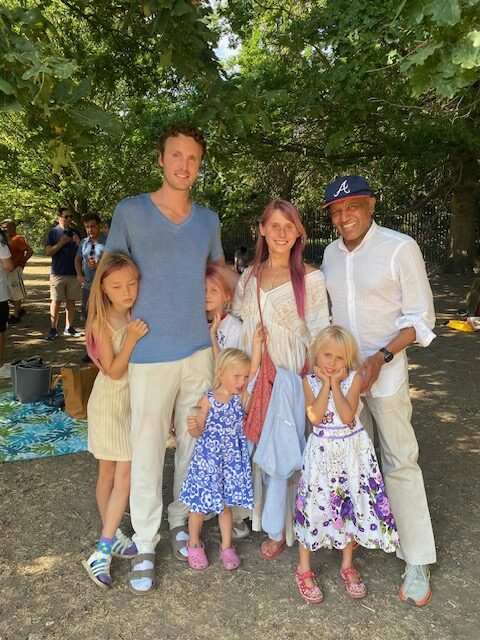
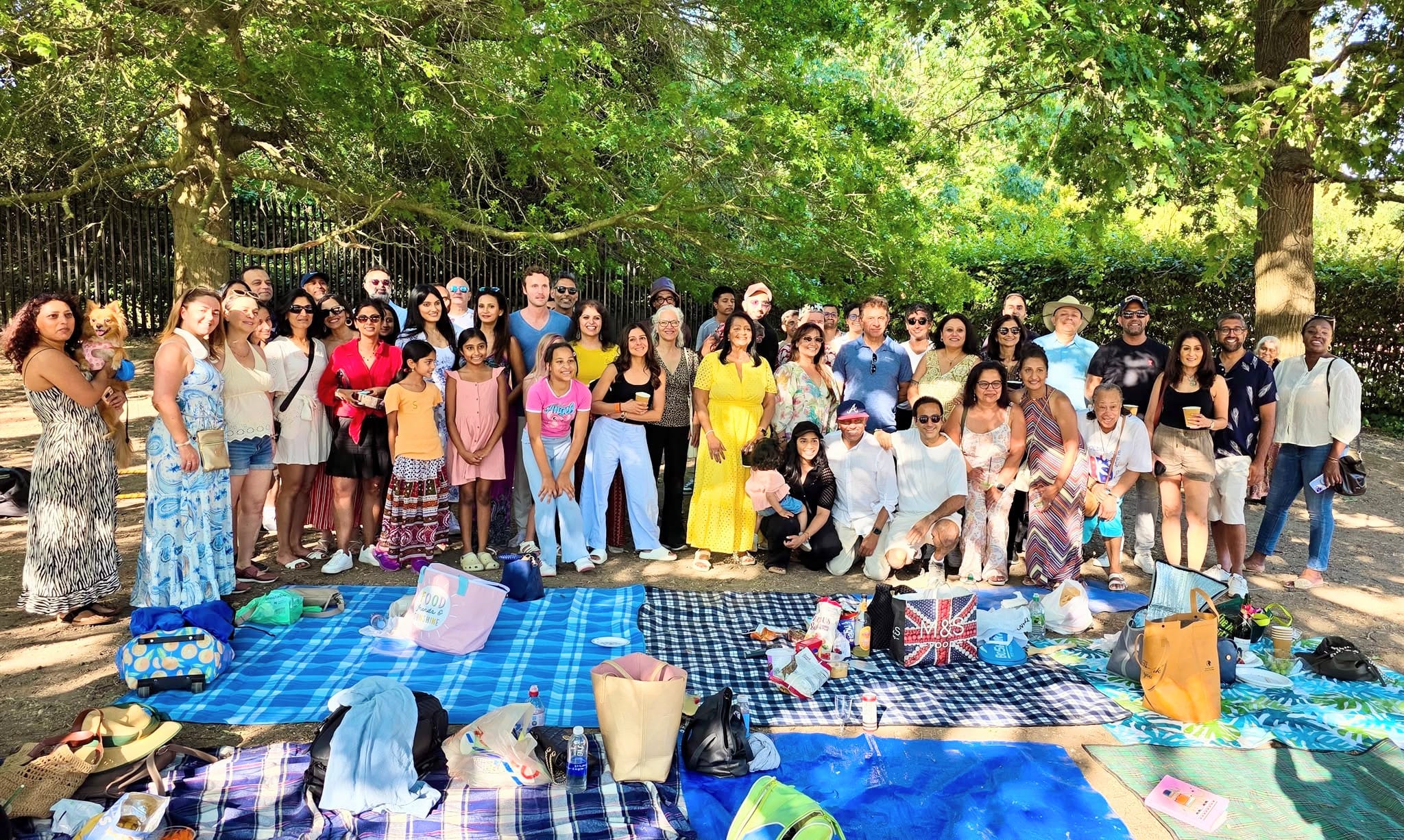
Last Sunday, a corner of Regent’s Park became a meeting place for friendships spanning decades, families, neighbours, old colleagues and recent strangers.
There were drums, hula hoops, food, bubbles, laughter yoga and conversations beneath the trees.
It was the 24th annual Friends & Friend’s Friends Picnic, born in 2002 from a simple idea: invite friends, encourage them to bring others and see what happens.
Twenty-four picnics later, I am beginning to understand the answer.
People who might never otherwise meet become part of one another’s stories.
But first, someone has to create the space.
The connection began before I arrived
The picnic began before I left home.
I had booked an Uber to transport me and all the equipment to Regent’s Park: African drums, giant hula hoops, games, bags and everything else required for the day.
The first driver arrived, looked at the mountain of picnic gear—and promptly drove away!
Fortunately, the second driver could not have been more different. He immediately began helping me load everything, and as we talked, we discovered that we were both originally from Kenya.
What might have been an ordinary journey became a wonderful conversation about life, community and The Connection Revolution. He could not join us because he was working, but we exchanged details and are now connected. He also left inspired to carry the message into his own community.
Two drivers encountered the same scene. One saw an inconvenience and drove away. The other saw a human being who could use some help—and opened the door to connection.
Yet another encounter was unfolding as I waited outside my home.
A woman and her daughter walked past. I smiled and invited the daughter to try a drum. That tiny invitation started a conversation.
They had moved from Dubai to London only a few months earlier and lived just down the road from me. I told them about the picnic and invited them along.
An hour later, they arrived in Regent’s Park. They had a fabulous time, met new people and instantly became part of a community that had existed just beyond their doorstep.
If the first Uber driver had not driven away, our paths might never have crossed at precisely that moment.
Sometimes an apparent inconvenience is simply life rearranging the timing.
Some connections take years
One of the joys of the picnic is that time seems to fold in on itself.
A friend and former work colleague who now lives in the United States came along. We had not seen each other in person for 26 years. So much life had happened, yet the picnic brought us face to face again.
Another reunion had been waiting ten years.
The day before one of my picnics a decade ago, I met someone in a Paperchase store. We spoke for perhaps five minutes, connected on Facebook and stayed loosely in touch. I invited him to the picnic the next day, but he was already committed to a family event.
Every year since our meeting, the picnic invitation went out, but for one reason or another, he could never make it. Until last Sunday.
Ten years after a five-minute conversation between two strangers in a stationery shop, we finally met again in Regent’s Park.
It made me wonder how many relationships are not lost, but simply waiting for the right moment and the right space to come alive again.
A gathering can hold a lifetime
Looking around the picnic, I could see different chapters of my life gathered together.
A friend from my school days was there, having attended almost all 24 picnics. She also met the man who became her husband through me.
Another couple first met at the picnic 13 years ago. Today, they have four daughters.
There were people I see regularly and others I see only once a year, when the blankets appear on the grass and our paths cross again beneath the same trees.
One neighbour surprised me by turning up. I had thought the couple were still in Canada, but they had returned—and that day happened to be their 18th wedding anniversary. They brought some bubbles, and we raised a glass to them. I hardly ever drink alcohol, but celebrating 18 years of marriage seemed a worthy exception!
A friend’s mother came laden with gifts for me. She visits from India for a few weeks each summer, and the picnic is always part of her London schedule. Although she had been unwell and was exhausted, she especially wanted to be there.
People may not remember every conversation, but they remember being welcomed, seeing familiar faces and belonging somewhere.
A community is not simply a collection of people who know one another. It is a place people feel drawn back to.
Making room for joy—and grief
My friend and master drummer Alex Dayo arrived with his drums and kept us in rhythm throughout the afternoon. The sound drew people together and gave the gathering its heartbeat.
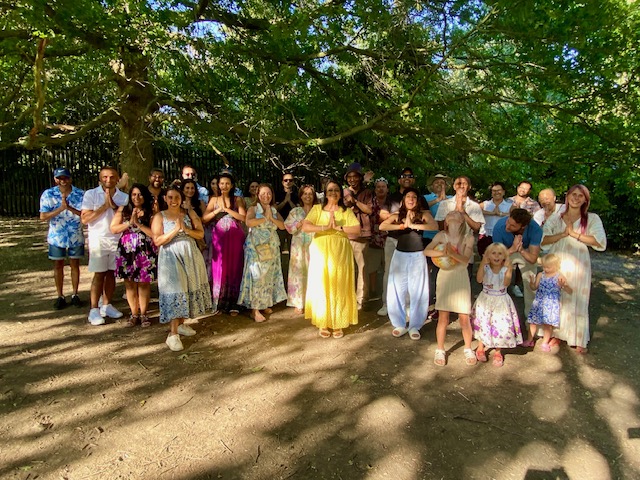
Then my friend Kalpana Doshi, the UK’s leading Laughter Yoga practitioner, led us through a hilarious session of spontaneous laughter.
Any remaining dignity disappeared as grown adults became gloriously silly. Before long, we were in stitches because laughter itself had become contagious.
For a few precious minutes, nobody needed to be productive or impressive. We were simply playing and laughing together.
But a meaningful community must have room for more than happiness. It must also be able to hold love, loss and remembrance.
Two years ago, in July 2024, I lost my dear friend Aditi. She had been a regular at the picnic, and her absence is still deeply felt.
This year, her mother, husband and young daughter joined us to create more joyful memories in a place that had held so many happy memories of Aditi.
Watching her wonderfully precocious daughter having such fun with the hula hoops was one of the most heartwarming sights of the day.
Grief and joy stood beside each other on the grass. We remembered someone we loved while watching the next generation laugh and play.
Perhaps that is what genuine community allows us to do. It creates room for both.
See the joy, laughter and connections from the picnic in the full photo and video album →
Somebody has to create the space
By the end of the afternoon, countless stories of connection were unfolding. People were exchanging numbers, renewing friendships, meeting neighbours and discovering unexpected things in common.
Some had travelled a long way to attend. Others had walked a few hundred yards and found a community waiting for them.
And it all began with an invitation.
Community can look spontaneous, but it rarely happens by accident. Someone has to choose the date, send the invitation, bring the drums, welcome the person who arrives alone and introduce people who might enjoy knowing one another.
Someone has to be willing to create the space.
That person does not create all the connection, only the conditions in which it becomes possible. Everyone else brings the magic: their stories, generosity, curiosity and willingness to participate.
That is the deeper lesson I carried home from our 24th picnic:
You do not need to know exactly what will happen before you bring people together. You only need to care enough to begin.
The space need not be a gathering of 100 people. It could be dinner around your kitchen table, a monthly walk, two friends who need to meet, or tea with a neighbour whose name you still do not know.
You may never see every consequence of your invitation. A friendship may begin. Someone may meet a future partner. A person who felt alone may discover that they belong. Two people separated by decades may finally find their way back to each other.
The Connection Revolution is not merely an idea or a message.
It happens whenever we stop waiting for connection to appear and take responsibility for creating it.
So perhaps the question for each of us is:
What could become possible if you created the space for people to find one another?
If these stories have inspired you to create more connection in your own life, I invite you to take my free Inner Transformation Scorecard. In just a few minutes, it will help you see where you feel supported and connected—and where one small, ed action could open the door to something new.
Take the Inner Transformation Scorecard