One of the things I love most about living in London is that you never quite know what the day has in store.
Yesterday was a perfect example.
I was in central London at the National Gallery for lunch with my friend Peter, who was celebrating a special birthday.
There were twelve of us gathered around the table, and it was one of those wonderfully relaxed afternoons where conversation flowed easily, stories were shared, old friendships were celebrated and new friendships began.
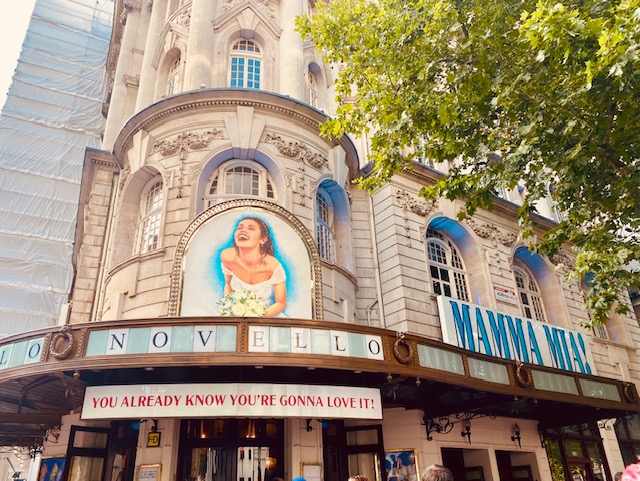
Afterwards, we wandered over to the West End to see the matinee performance of Mamma Mia!. It was joyful, uplifting and exactly the sort of show that leaves you walking out into the sunshine with a smile on your face.
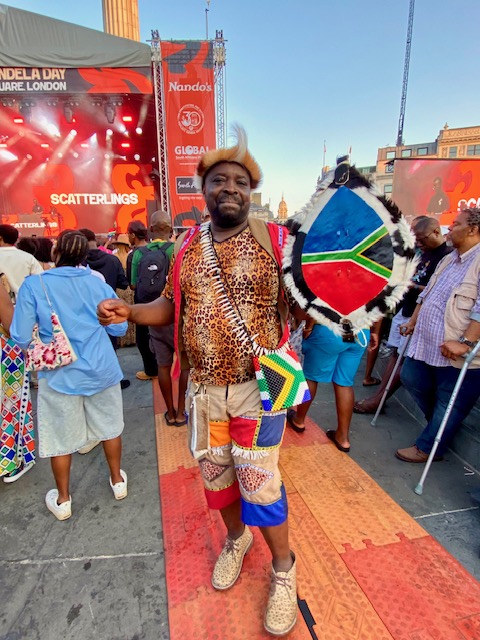
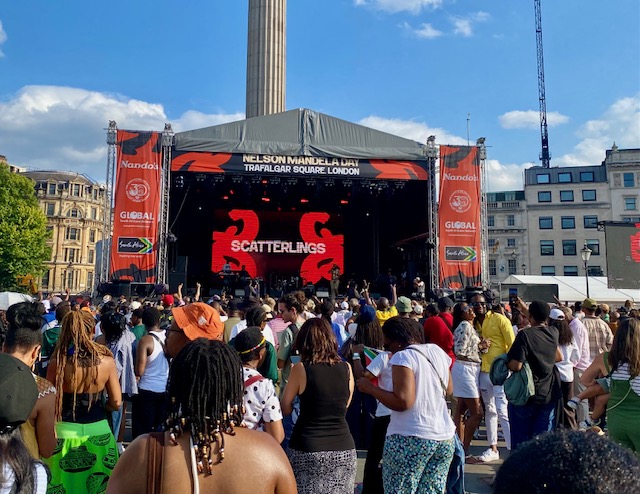
As I made my way through Trafalgar Square afterwards, I could hear music drifting across the square. Curious, I wandered over to see what was happening and, quite unexpectedly, found myself in the middle of London’s celebration of Nelson Mandela Day.
The square was alive with music, dancing and laughter. Families had gathered, children were waving flags and people from across the African diaspora had come together to celebrate the life of a man whose influence continues to reach every corner of the world.
I hadn’t planned to stay for very long, but there was something about the atmosphere that invited me to slow down and simply enjoy being there.
I’m so glad I did.
Within minutes I found myself chatting to people from South Africa and also someone from Kenya, the country of my birth.
It was a joy to reconnect with my African roots.
We spoke about Mandela, our memories of Africa and what his life still means to us today. As so often happens, strangers quickly became friends through nothing more complicated than a genuine conversation.
Standing there brought back another memory.
In February 2005, I stood in that very same square listening to Nelson Mandela speak during the Make Poverty History campaign.
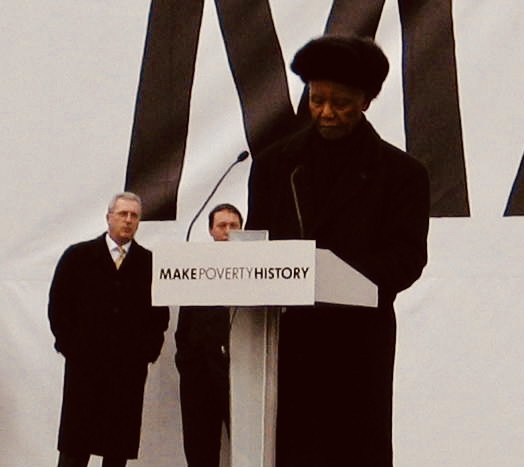
I was there with my dear friend Resli and it was such a moving experience to hear Madiba speak in person.
More than twenty years have passed, yet I can still remember the extraordinary sense of hope he created. He didn’t simply inspire people. He started conversations—between races, between neighbours, between former enemies and, ultimately, between a nation and its future. He reminded us that our shared humanity will always be greater than the things that divide us.
Yesterday also reminded me of another visit that has stayed with me over the years.
Almost 25 years ago in August 2001, during a business trip to South Africa, I visited Nelson Mandela’s modest home in Soweto.
What struck me wasn’t its size but its simplicity. Walking through those rooms, I was reminded that greatness has very little to do with wealth, status or possessions. Instead, it grows out of the values we choose to live by—our courage, our humility and, perhaps most of all, our willingness to forgive.
Those thoughts stayed with me yesterday as I made my way home, and they blended with another conversation I’d had just the day before.
I’d popped into my local pharmacy and got chatting to the pharmacist, who told me she was originally from Ukraine.
I asked whether she still had family there, and she quietly explained that although her mother had managed to come to Britain in March 2022, her brother had stayed behind.
What stayed with me wasn’t the detail of the conversation.
It was the sadness and concern in her voice as she spoke about her mother’s constant worry.
As I walked home, I found myself thinking not only about that family but about mothers everywhere who are lying awake at night worrying about sons and daughters caught up in war.
Behind every headline is a family.
Behind every conflict are ordinary people who simply want to live in peace.
It made me wonder what any one of us can really do in a world that sometimes feels so divided.
Most of us will never negotiate peace treaties or address the United Nations. But every one of us has the opportunity to bring a little more peace into the lives of the people we meet.
We can choose kindness over judgement, curiosity over assumptions and listening over arguing. We can smile at a stranger, reach out to an old friend, volunteer in our community or simply take the time to hear another person’s story.
As I reflected on the day, something struck me. Almost every meaningful moment had begun with a conversation.
Peter’s birthday had brought twelve people together around a table.
A few words exchanged in Trafalgar Square reconnected me with my African roots.
A simple question to my pharmacist opened a window into the human cost of war.
None of those conversations changed the world overnight, but each one changed the people involved, if only a little. And perhaps that’s how every great legacy begins—not with grand speeches or historic moments, but with one person choosing to reach out to another.
Perhaps that’s why Nelson Mandela’s legacy still matters so much today.
He understood that leadership isn’t really about power.
It’s about service.
It’s about bringing people together.
It’s about helping others believe in something bigger than themselves.
Every year, Nelson Mandela Day encourages people around the world to spend 67 minutes serving others, representing the 67 years he devoted to justice, equality and human dignity.
I love the simplicity of that invitation. Not because 67 minutes will change the world overnight, but because every act of service changes something within us.
It reminds us that leadership isn’t reserved for politicians, CEOs or people standing on stages.
Leadership is how we choose to show up every single day.
It’s found in our kindness, our courage, our willingness to listen and our determination to leave the people we meet feeling just a little more hopeful than before.
Perhaps that’s why Nelson Mandela continues to inspire us all.
He didn’t simply change a nation.
He changed the way millions of people think about what it means to lead.
And that’s a legacy worth aspiring to.
Many people believe Nelson Mandela spoke the following words at his inauguration. In fact, they were written by Marianne Williamson in her wonderful book A Return to Love. Whether Mandela ever quoted them or not, I think they beautifully capture the spirit of the man.
“As we let our own light shine, we unconsciously give other people permission to do the same. As we’re liberated from our own fear, our presence automatically liberates others.”
As I reflected on yesterday, I found myself asking three simple questions.
I’d love to leave them with you today.
How will you let your light shine from today?
What lessons from Nelson Mandela’s life will you carry into your own?
What legacy do you hope you’ll leave behind?
Those aren’t questions to answer just once.
They’re questions to return to throughout our lives.
Because our legacy isn’t created in one defining moment. It’s created in thousands of ordinary moments through the choices we make, the people we encourage and the way we leave others feeling after they’ve spent time with us.
That, to me, is what The Connection Revolution is all about.
Every great legacy begins with a conversation.
Perhaps yours will too.
A Personal Invitation
If this post has prompted you to reflect on your own leadership, relationships and the legacy you’re creating, I’d love to invite you to take my Inner Transformation Scorecard
It only takes a few minutes to complete, and you’ll receive a personalised report exploring eight key areas of your life—from purpose and resilience to relationships, wellbeing and self-connection.
My hope is that it helps you become more intentional about the life you’re creating and the legacy you’re leaving behind. After all, every great leader starts by leading themselves.
 [Take the Inner Transformation Scorecard]
As always, I’d love to hear your thoughts, so do message me and let me know what resonated most with you.
Have a beautiful day!