The Connection Revolution #22
How much of your life takes place inside your own head?
The conversation you replayed after it was over.
The mistake you wish you hadn’t made.
The argument you never had but have somehow won three times already.
The email you drafted in your mind before you’ve even opened your laptop.
The future scenario you’ve imagined a dozen different ways.
The worry that keeps returning, despite your best efforts to let it go.
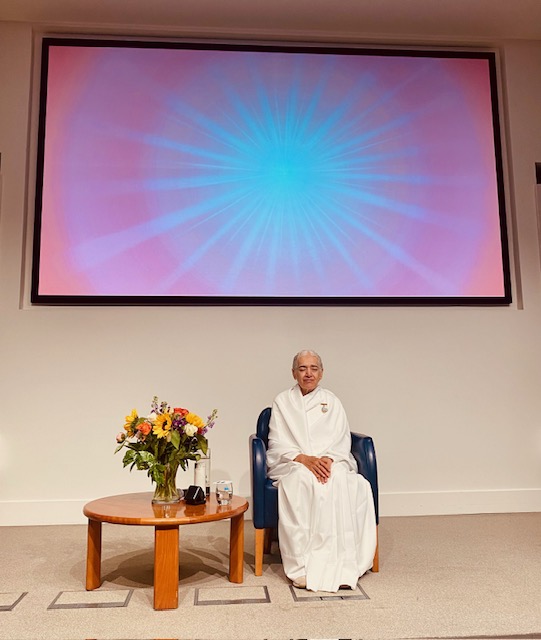
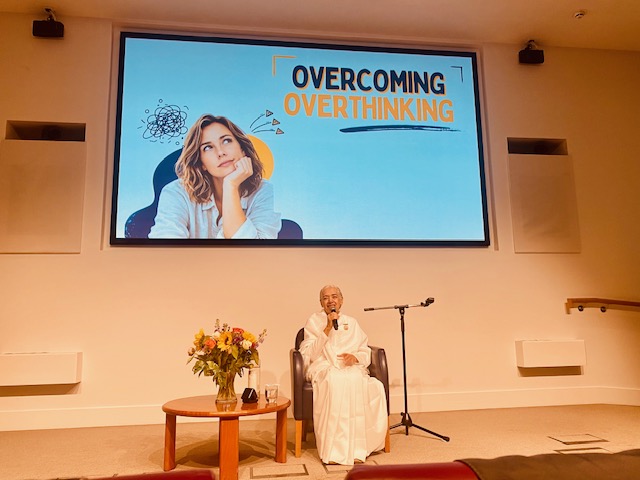
Last Thursday evening, I attended a talk in London by Sister Jayanti of the Brahma Kumaris. Behind her on the screen were two simple words:
Overcoming Overthinking
I suspect those words resonated with many of us in the room.
After all, overthinking has become one of the defining habits of modern life.
We analyse.
We worry.
We compare.
We second-guess ourselves.
We replay the past and rehearse the future.
And in doing so, we often lose touch with the present moment — the only place where life is actually happening.
Sister Jayanti knows a thing or two about the workings of the mind.
Born in India in 1949, she has been practising Raja Yoga meditation since her late teens and has represented the Brahma Kumaris at the United Nations since 1982.
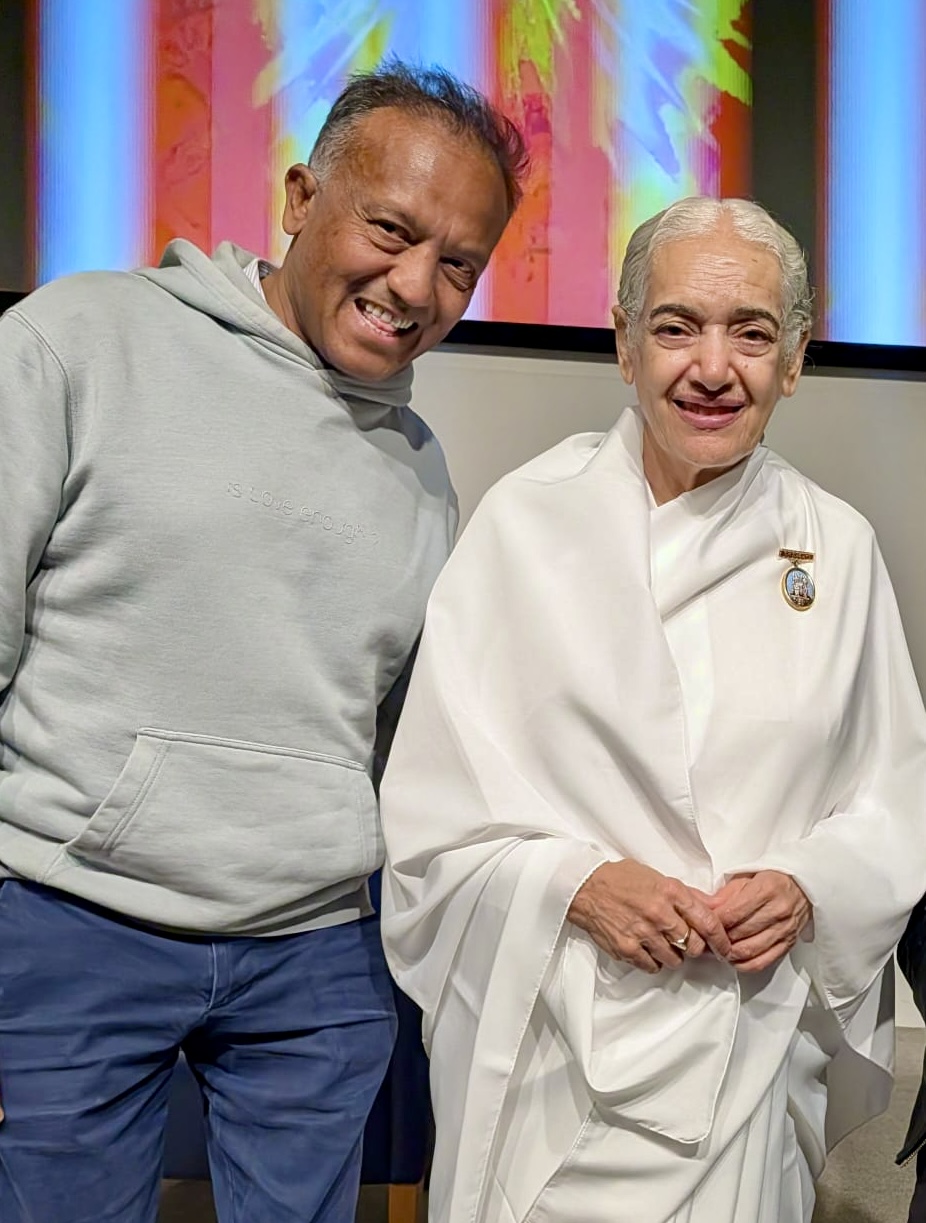
Today, as European Director of the organisation, she continues to travel the world sharing wisdom on meditation, self-awareness and inner peace.
The theme of the evening was overthinking.
But what unfolded was really a conversation about something much deeper.
It was about our relationship with ourselves.
One observation stayed with me long after I left the room.
She pointed out that four people can experience exactly the same situation and yet have completely different thoughts about it.
The difference lies not in the event itself but in what is happening within each individual.
That struck me.
We often assume that our stress, frustration or unhappiness is being caused by circumstances around us.
But perhaps the greater influence is the meaning we give to those circumstances.
The stories we tell ourselves.
The assumptions we make.
The fears we carry.
The conversations that take place in the privacy of our own minds.
The real question, therefore, is not:
“What is happening to me?”
But:
“What is happening within me?”
That shift feels subtle, yet it changes everything.
At one point, Sister Jayanti shared a simple idea that became the headline in my notebook for the rest of the evening:
“Make your mind your friend rather than your enemy.”
I found myself reflecting on that afterwards.
How many of us speak to ourselves with the same kindness, patience and encouragement that we would offer a close friend?
How often do we become our own harshest critic?
How often do we judge ourselves for mistakes we’ve made, replay conversations we wish had gone differently, or compare ourselves to where we think we should be by now?
The truth is that we are in conversation with ourselves every moment of every day.
The quality of that conversation shapes the quality of our lives.
Another distinction she made resonated deeply.
Productive thinking leads somewhere.
It helps us make a decision.
It gives us a new understanding.
It helps us solve a problem or take action.
Overthinking simply goes round in circles.
The same thoughts.
The same worries.
The same fears.
Nothing new emerges.
One of the simplest questions we can ask ourselves is:
“Am I becoming clearer, or am I simply repeating myself?”
If clarity is increasing, the thinking is serving us.
If not, we may be stuck in a mental loop.
One of the most powerful parts of the evening was her reminder that many of us don’t truly know ourselves.
We identify with our profession, our age, our achievements, our nationality or our circumstances.
Yet these things are merely descriptions.
They are not who we really are.
Real self-awareness requires the courage to look within and understand both our strengths and our weaknesses, our light and our shadow, our gifts and our growing edges.
Only then can genuine transformation begin.
This reminded me of something I often see in my coaching work.
People frequently come to coaching because they want to improve a particular area of their life.
Their career.
Their health.
Their relationships.
Their confidence.
Their sense of purpose.
Yet beneath all of these challenges is often a deeper question:
“Do I really know myself?”
Because when we know ourselves, we make better decisions.
When we know ourselves, we stop seeking approval from everyone else.
When we know ourselves, we begin to trust ourselves.
And when we trust ourselves, life becomes simpler.
Not necessarily easier.
But certainly clearer.
During the Q&A, someone asked how to deal with feeling overwhelmed when there are simply too many things demanding our attention.
I suspect most of us can relate to that.
There are times when everything feels urgent.
Every problem feels important.
Every decision feels significant.
The result is mental clutter.
Her suggestion was practical and wise.
Step back.
Create space.
Prioritise.
Ask yourself what truly needs attention now and what can wait.
In other words, create clarity.
That idea immediately made me think of the Inner TransformationScorecard that many of you have taken over the last few months.
One of the biggest challenges people face isn’t a lack of motivation or capability.
It’s a lack of clarity.
They know something feels out of alignment.
They know they want more from life.
They know they are capable of more.
But they are not sure where to focus.
The Scorecard was designed to help answer exactly that question.
Because when everything feels important, nothing receives the attention it deserves.
Clarity creates momentum.
Focus creates progress.
And progress creates confidence.
As the evening drew to a close, Sister Jayanti guided us through a short meditation.
She invited us to hold a single thought of peace in our minds and simply observe what happened.
Nothing dramatic.
Nothing complicated.
Just a gentle reminder that peace is not something we need to chase.
It is something we can return to.
Again and again.
Perhaps that was my biggest takeaway from the evening.
We spend so much of our lives trying to manage the outside world.
But maybe the deeper work is learning how to manage our inner world with greater awareness, compassion and wisdom.
Maybe the most important connection of all is the connection we have with ourselves.
Because every other relationship in our lives grows from there.
The evening sparked far more reflections than I can fit into a single newsletter, and over the coming weeks I’ll be sharing a longer article exploring some of Sister Jayanti’s teachings on overthinking, self-respect, meditation and inner peace.
For now, I’d encourage you to consider one simple question.
Reflection
What thought, worry or story have you been carrying around recently that no longer deserves free rent in your mind?
And if you’re looking for greater clarity about where to focus your energy and attention right now, you can take my free Inner Transformation Scorecard below.
It only takes a few minutes and may help you identify the one area of your life that is ready for your attention, growth and transformation.
 [Take the Inner Transformation Scorecard here]
Until next time,
“Make your mind your friend rather than your enemy.” – Sister Jayanti
Further Reading
The wisdom shared during Sister Jayanti’s talk sparked many more reflections than I could fit into this newsletter. Later this week I’ll be publishing a companion article exploring some of the deeper lessons from the evening, including self-respect, meditation, peace of mind and the difference between productive thinking and overthinking.