
The loss of a dear friend led me to discover the deeper meaning of noble friendship — and to question how I show up for the people I love.
Recently, a dear friend of mine and his wife tragically died in a car crash in Canada while they were on holiday from London. Such a big shock for the family and community.
I had known him for thirty years.
We first met quite by chance at a food exhibition in Paris. He was there with his brother, and their family owned a supermarket business in London.
At the time, we explored the possibility of doing some work together, marketing Asian foods to the mainstream supermarkets. Nothing significant ultimately came of the business idea, and our careers soon took off in different directions.
But something much more enduring came from that chance meeting.
We became good friends.
Looking back now, there is something rather beautiful about that. We met because of business and initially talked about what we might create together commercially. Yet the thing of real value that emerged from that meeting had nothing to do with supermarkets, Asian foods or business.
It was the friendship itself.
He was one of the kindest and most caring people I have ever known. He had a gentleness about him, a generosity of spirit and a genuine concern for other people that was simply part of who he was.
Over the years, I also became friends with his wife, who was herself a lovely and caring person. And through me, my sister got to know them both.
They took her under their wing and supported her deeply over many years. Although my friendship with them continued, during the last few years we didn’t see very much of each other. Life moved on, as it does, and our respective worlds became busy with other things.
My sister’s friendship with them, however, continued to grow and deepen. In time, she became much closer to them than I was.
I was always happy about that. One of the great joys of introducing people is watching a relationship take on a life of its own. Once the introduction has been made, it no longer belongs to the person who made it.
I could never have imagined, walking around that food exhibition in Paris thirty years ago, where that one chance encounter would eventually lead.
And now they are both gone.
Alongside the shock and sadness, I have been left with a deep sense of regret.
I wish I had spent more time with him.
I cared about him and regarded him as a good and longstanding friend. Yet somewhere along the way, seeing each other became something we would do another time.
Perhaps that is one of the dangers of a friendship that has lasted for decades. We assume it will always be there because it always has been. There will be another opportunity to meet, another meal together, another phone call.
Life gets busy, months become years and we reassure ourselves that there will always be more time.
Until, suddenly, there isn’t.
I cannot change that now. But I can pay attention to what the regret is trying to teach me.
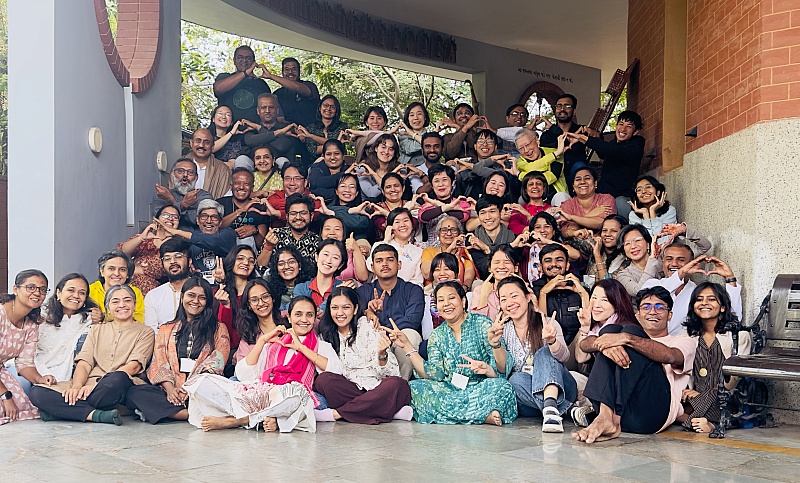
And strangely, it has brought me back to something I wrote in my notebook during my Spirit of Service retreat in Ahmedabad last Dedember.
What Is Noble Friendship?
During the retreat, we explored the idea of noble friendship, and one line in particular stayed with me:
“Don’t look out for noble friends, be noble.”
At the time, I loved the sentiment. It has since taken on a much deeper meaning because when I think about my friend, the word noble seems entirely appropriate.
He really was a noble friend.
But as I subsequently reflected on Nipun Mehta’s beautiful exploration of noble friendship, I realised there is an important distinction between a noble friend and noble friendship.
Perhaps the simplest way I can express it is this:
A good friend cares about me and is there for me.
A noble friend embodies qualities that inspire and elevate me.
Noble friendship is the regenerative relationship between us through which our respective virtues call forth, strengthen and amplify one another — and potentially ripple out into the world.
That distinction has made me look at my own friendship differently.
I can say with certainty that he was a noble friend. But his death has left me with a more uncomfortable question:
Was I as present a friend to him as I could have been?
And beyond that, am I creating the kind of friendships in my life today in which we help call forth the very best in one another?
Who Are We Becoming Because of Each Other?
One of the ideas in Nipun’s exploration of noble friendship that particularly struck me is the shift away from focusing simply on what somebody does towards paying attention to who they are becoming.
We spend so much of our lives defining ourselves and other people by what we do. Even within friendship, we can focus on what somebody does for us.
Noble friendship invites us to ask something very different:
Who am I becoming because I know you? And who are you becoming because you know me?
When I think about my friend through that lens, I realise that his kindness wasn’t simply something I received from him. His way of being showed me something about how a human being could be.
I saw those same qualities in the way he and his wife embraced my sister and supported her over so many years. Goodness wasn’t something they talked about. They lived it.
Two phrases I wrote down in Ahmedabad capture something of this beautifully:
“My virtue makes your virtue.”
And:
“Can the good in me regenerate the good in you?”
Your courage can awaken some of mine. My generosity might remind you of your own. Somebody’s vulnerability can give another person permission to drop their guard, while another person’s compassion can soften something within us.
We don’t necessarily tell each other to become better people. Something about the relationship itself invites it.
Perhaps that is one of the greatest gifts of friendship: through the way we live and the way we love, we can call forth the best in one another.
That word regenerate feels important.
Noble friendship isn’t simply about one person giving goodness to another. It is about goodness creating more goodness.
From Market Logic to Love Logic
There is a certain irony that my friend and I originally met through business.
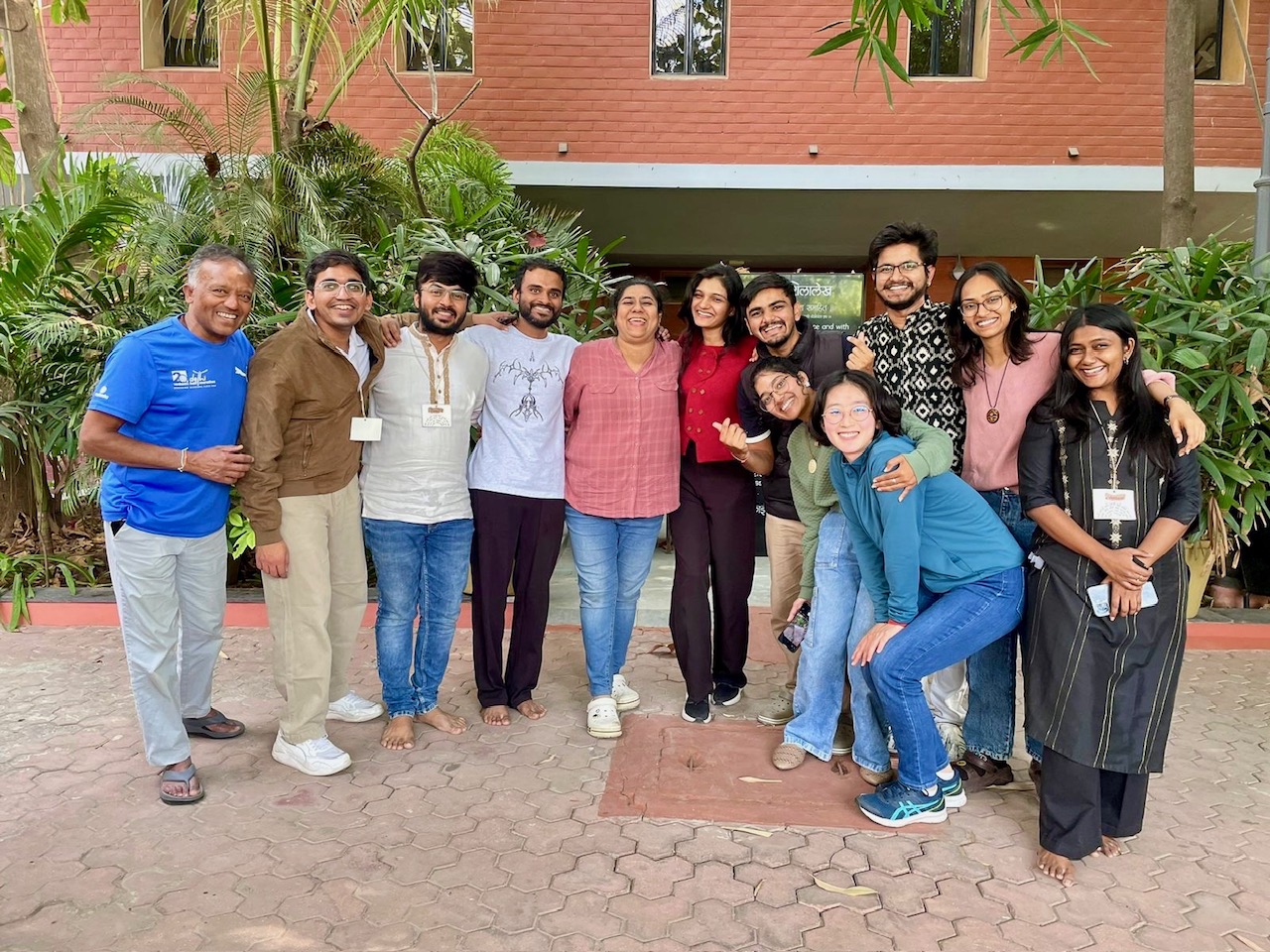
Our first conversations were about products, supermarkets and the possibility of working together. In the language we used in Ahmedabad, our relationship began in the world of “market logic” — the world of exchange, value and return.
Yet the business opportunity disappeared and the relationship remained.
What endured for thirty years wasn’t the transaction. It was the connection.
Without realising it, however, market logic can sometimes creep into our personal relationships. We notice who called last, who organised dinner, who remembered the birthday and who seems to be making more effort. We quietly begin keeping an invisible emotional balance sheet.
Nipun uses a wonderful expression in his writing: “serve without pockets.”
I understand this as giving without constantly calculating what might come back to us.
Instead of wondering whose turn it is to call, perhaps we simply call because we care. Instead of asking what somebody can do for us, perhaps we become genuinely interested in them — their hopes, their struggles and who they are becoming.
This doesn’t mean endlessly giving ourselves away or taking responsibility for another person’s happiness. Noble friendship is not about rescuing someone.
It is about creating the conditions in which something good can emerge in both of us.
When Goodness Begins to Travel
Perhaps the aspect of noble friendship that most excites me is what happens when the goodness created within a relationship doesn’t remain there.
Nipun writes about the “strength of deep ties.” We often hear about the strength of weak ties and how information, opportunities and introductions can travel through networks.
Through deep ties, something else can travel: compassion.
Someone is generous to me, and I become a little more generous with somebody else. Someone believes in me when I have stopped believing in myself, and years later I find myself offering that same encouragement to another person.
Goodness becomes regenerative. It travels.
As I think about my friend, his wife and my sister, I realise that I witnessed something like this in my own life.
A chance encounter at a food exhibition in Paris created a friendship between two people. Through that friendship, my sister met them both. They took her under their wing, and a friendship developed that eventually became deeper than the one that had originally connected them.
I didn’t engineer any of that. I simply made the connection, and the relationship took on a life of its own.
We cannot possibly know what one conversation, one introduction or one act of kindness might eventually create.
Do I Call Forth the Best in Others?
This brings me back to that line from Ahmedabad:
“Don’t look out for noble friends, be noble.”
I initially understood it as an invitation to become the kind of friend I would like to have. I now think it asks something deeper.
Instead of searching for people who can enrich our lives, perhaps we can become the kind of person whose presence calls forth something richer in others — not by trying to change or fix them, but through our own presence, generosity, courage, integrity and love.
The question changes from “Do I have the right people around me?” to:
“What does my presence bring out in the people around me?”
Do people feel more themselves when they are with me? Do they feel heard rather than judged? Does my courage encourage theirs? Does my generosity make generosity feel more possible?
Ultimately, can the good in me regenerate the good in them?
Noble friendship cannot be something I do to another person. It happens between us. If my virtue helps call forth yours and your virtue helps call forth mine, something is created that neither of us could have created alone.
We become more because of each other.
While We Still Have Time
All of this brings me back to my friend.
There is probably someone in your life whom you love and who has been there for you over many years. Perhaps, like me, you have come to take the friendship for granted simply because it has always been there.
Maybe you’ve been meaning to call them or have been saying for months that you really must get together. Perhaps there is something you have always appreciated about them but have never actually put into words.
Don’t wait for the perfect occasion. Call them, arrange to see them and tell them what they mean to you. Most importantly, give them some of your time while you still have that time to give.
I wish I had done more of that with my friend.
I also wish I had spent more time with him and his wife together. I cannot change that now, but I can allow the regret to teach me something about how I want to live from here onwards.
He was a noble friend to me. Whether I was always as good a friend to him as I could have been is a question I will have to sit with.
Perhaps the best way I can honour him now is not simply to remember his kindness, but to allow it to change the way I show up for the people who are still here.
His goodness doesn’t have to end with him. Nor does the goodness that he and his wife brought into my sister’s life.
Their kindness can become kindness we show somebody else. The care they gave can remind us to care more deeply. Their generosity of spirit can travel onwards through people they may never have known.
Thirty years ago, I went to a food exhibition in Paris and happened to meet a man who was there with his brother. We talked about Asian foods, supermarkets and the possibility of working together.
The business opportunity came and went.
The friendship remained.
And today I am left thinking not about the business we might have created, but about the human being he was, the kindness he and his wife brought into my sister’s life, and what their lives are now asking of me.
Perhaps that is the question I want to leave you with too:
Am I merely fortunate enough to have good and noble people in my life, or am I helping to create the kind of friendships in which we call forth the very best in one another?
Because The Connection Revolution isn’t ultimately about collecting more contacts, attending more events or even making more friends.
It is about what becomes possible between us — and who we become because of each other.
Cherish your friends while they are here. Tell them what they mean to you and give them your presence rather than merely your good intentions.
And perhaps, together, we can create friendships in which the goodness in each of us brings forth more goodness in the other — and then allow that goodness to ripple out into the world.
A Personal Invitation
Much of my work as a coach begins with conversations like this — about the things that can easily get lost beneath the busyness of a successful life: our relationships, the people who matter, the choices we are making and the person we are becoming.
If this article has prompted you to reflect on your own life, and you would value a thoughtful conversation about what might need more of your attention now, I’d be delighted to hear from you.