
“I’d talk to the TV.”
Those words caught my attention in a BBC report, and then my thoughts turned to my mother.
The report about paid companionship in China described the loneliness of Yang, a 91-year-old woman living on the outskirts of Beijing. After her husband died, she sometimes spoke to the television because she wanted someone to talk to.
Her days began to change when Wang Yingwei and his team started visiting twice daily with hot meals, practical help and human company.
My mother loved watching spiritual broadcasts on her iPad while resting in bed. She passed away in October 2022, aged 86.
She lived with my brother and sister-in-law. My sister and I visited frequently, as did three of her siblings who lived locally. She was surrounded by company and conversation.
I believe her long, happy life owed something to that surrounding love and support. She knew she mattered to us.
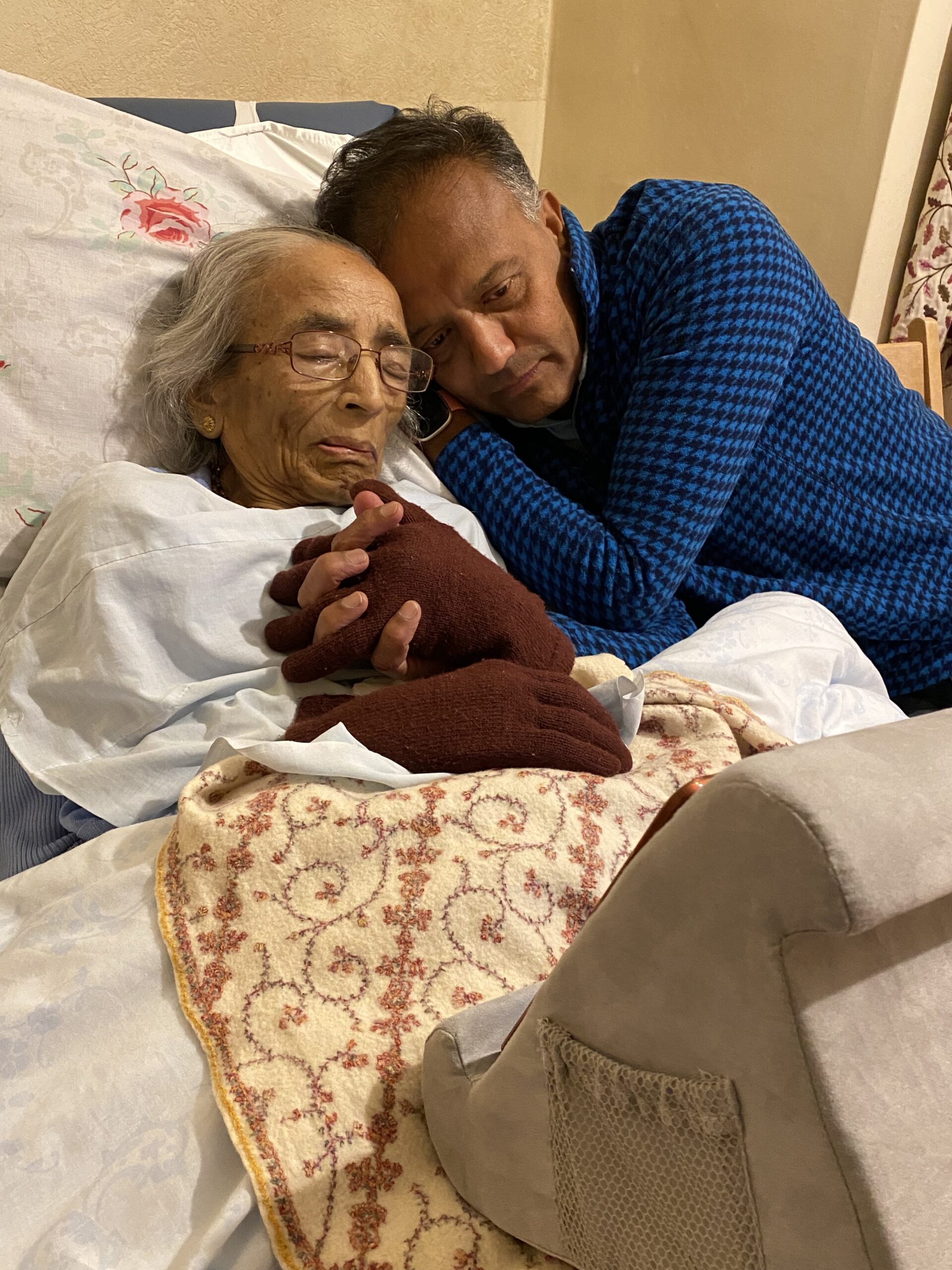
My heart breaks when I hear about older people living in isolation, with few visitors, sometimes none at all.
I think of the stories they could share, the affection they still have to give, and the ordinary things they might want to tell someone.
The ordinary details of a life deserve a listener too.
A Yellow Rose from Our Garden
When I was a young child, an older woman lived a few doors away from us. I used to see her at her window every day. To my young eyes, she looked sad and lonely.
One day, I picked a single yellow rose from our garden, walked over to her house and knocked on the door.
There were no rose bushes around her house, which made bringing her that flower feel particularly special.
I will always remember her face when she opened the door and I handed her the rose. Her joy was extraordinary. She positively lit up.
That day, I learnt how little it can take to bring happiness into someone else’s day.
Looking back, I wonder whether part of her delight was knowing that a child a few doors away had thought of her.
We all want to feel that we matter to someone.
Even after a busy day, you can reach the evening wishing you had someone to talk to about what really matters.
Yet we hesitate to call, assuming our friends are busy. How much easier would it feel if we knew our company was welcome?
An Empty Chair Can Be an Invitation
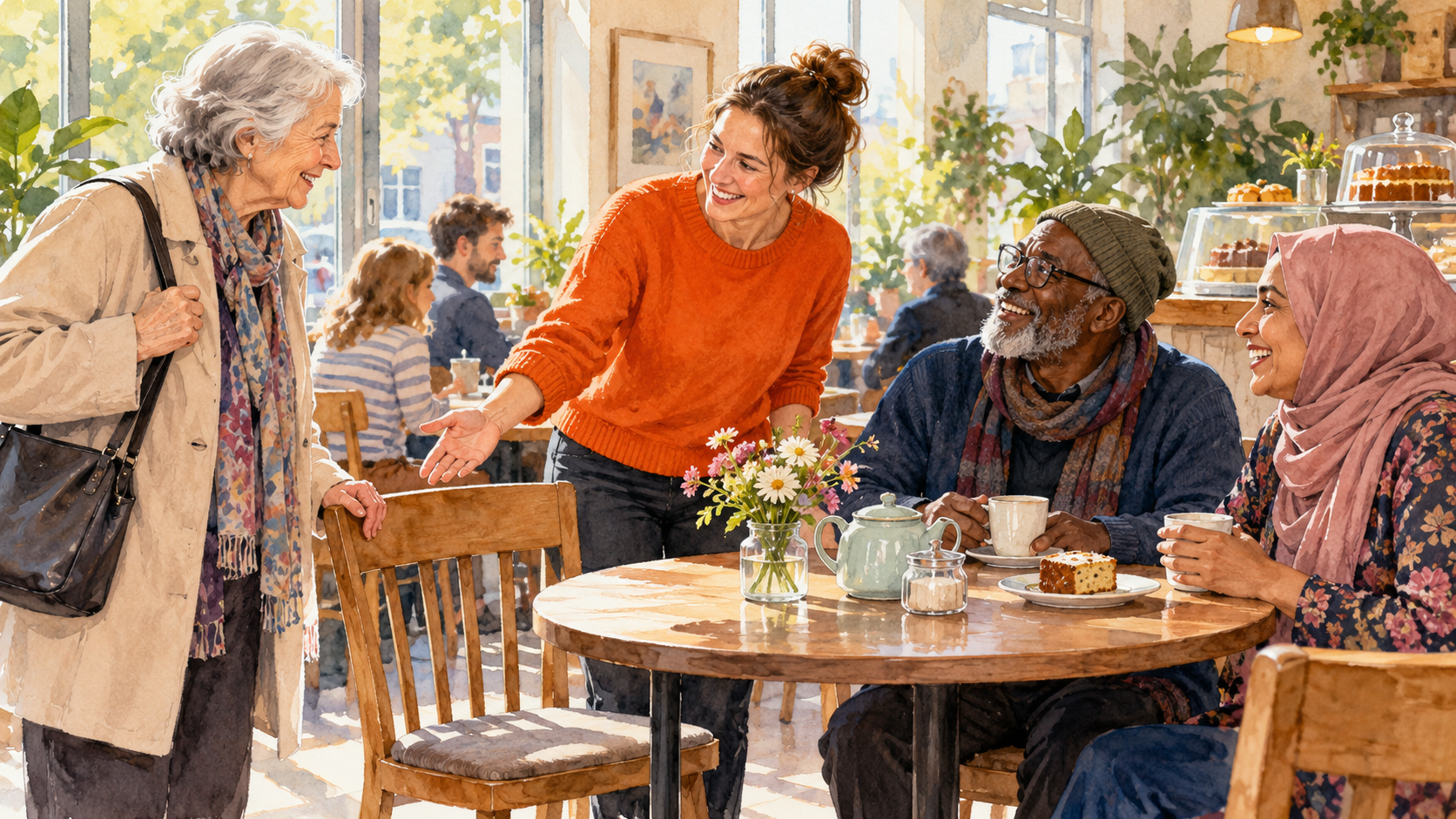
My friend Amanda introduced me to an initiative called Empty Chairs.
A volunteer hosts a table in a pub or café, leaving seats available for anyone who would enjoy some company.
You can arrive alone, without booking or paying to attend. There is no expectation to buy anything, explain why you came or share anything personal. The host wears orange so you can find them easily.
Knowing someone is there to welcome you could make walking through that door a little easier.
Empty Chairs began after Dean Perryman lost his best friend Rob in late 2025. That December, Dean committed to sitting in a pub every evening, making space for anyone who wanted a conversation.
The first person joined him on day four.
That detail stays with me. Dean kept showing up before he knew whether anyone would come.
We cannot know what will grow from the space we create for another person. Dean created it anyway.
It expresses something I love about bringing people together around a table: giving someone a place where they know they can join in.
Perhaps one of the kindest things we can do is remove someone’s doubt about whether they are welcome.
You can explore Empty Chairs to find a gathering or consider hosting.
Taking Care with Our Words
That spirit of welcome also asks something of me: to consider how my own words and actions make people feel, even after a gathering has ended.
I know I haven’t always made people feel welcome. Something I said and shared left a friend feeling unwelcome and caused them real pain.
I deeply regret it. My words fell short of the care I want to show others, and I am committed to doing better.
It has reminded me to take greater care with my words, both with people I love and with those who barely know me. Caring about connection means being willing to recognise when our own actions have damaged it.
The Buddhist teaching of right speech offers me a reminder to pause before speaking or sharing. Three questions I want to keep close are:
Is it true? Is it useful? Is it kind?
And even then, I can ask whether this is the right moment to say it.
These are questions I need to practise myself.
Three Ways to Make Room for Each Other
We can bring that welcome into our everyday lives.
1. Let someone know you would love to see them
“Would you like to join me for a walk on Thursday? I’d love to see you” offers a clear invitation.
Think of someone you miss, or someone you would like to know better. Invite them into something you are already doing: a walk, a cup of tea, a trip to the market.
If they decline, let them feel just as welcome another time.
2. Follow a kind thought with a small commitment
Many of us carry unfinished intentions: the friend we meant to call, the neighbour we promised to invite round, the person whose difficult appointment we intended to ask about.
We care, and then the week fills up.
Choose one of those intentions and give it space in your diary. Perhaps arrange a regular call or an occasional lunch, at a rhythm that works for both of you.
Remembering what someone was worried about and asking how it went helps them feel cared for, even when we are apart.
3. Allow yourself to be welcomed too
If you are used to looking after others, admitting that you would appreciate company may feel unfamiliar.
You are allowed to say, “I’d really enjoy seeing you this week.”
You can accept an invitation without working out how to repay it. You can arrive with your own worries, your unfinished thoughts and whatever kind of day you have had.
The love and support I wished for my mother are things I wish for you too. You deserve to receive the warmth you offer others.
What One Small Gesture Can Begin
Practical support, accessible places to gather and dependable services all matter in addressing loneliness. Alongside them, each of us can help someone feel wanted.
This is why the Connection Revolution matters so much to me. I want us to make room for one another while we have the opportunity, and to let ourselves receive love too.
In an earlier article, I explored the question: What if we are here to create miracles for one another?
One thought continues to guide me:
We can live in ways that make extraordinary possibilities more likely for one another.
An invitation gives a friendship somewhere to begin. Showing up again gives it a chance to grow.
I still remember the joy on that woman’s face when I handed her the yellow rose. As a child, I had no grand plan. I simply saw someone who seemed lonely and wanted to brighten her day.
That possibility is still available to us.
Who has come to mind as you have been reading? What small gesture could you make towards them this week?
Perhaps today is the day to make that invitation, pick up the phone or knock on the door.
An Invitation to Talk
If you are wondering what comes next in your own life, I would love to offer you a coaching conversation.
We can explore what matters to you, what you want to change and what you would love to create from here.
Get in touch, and we can arrange a time to talk.